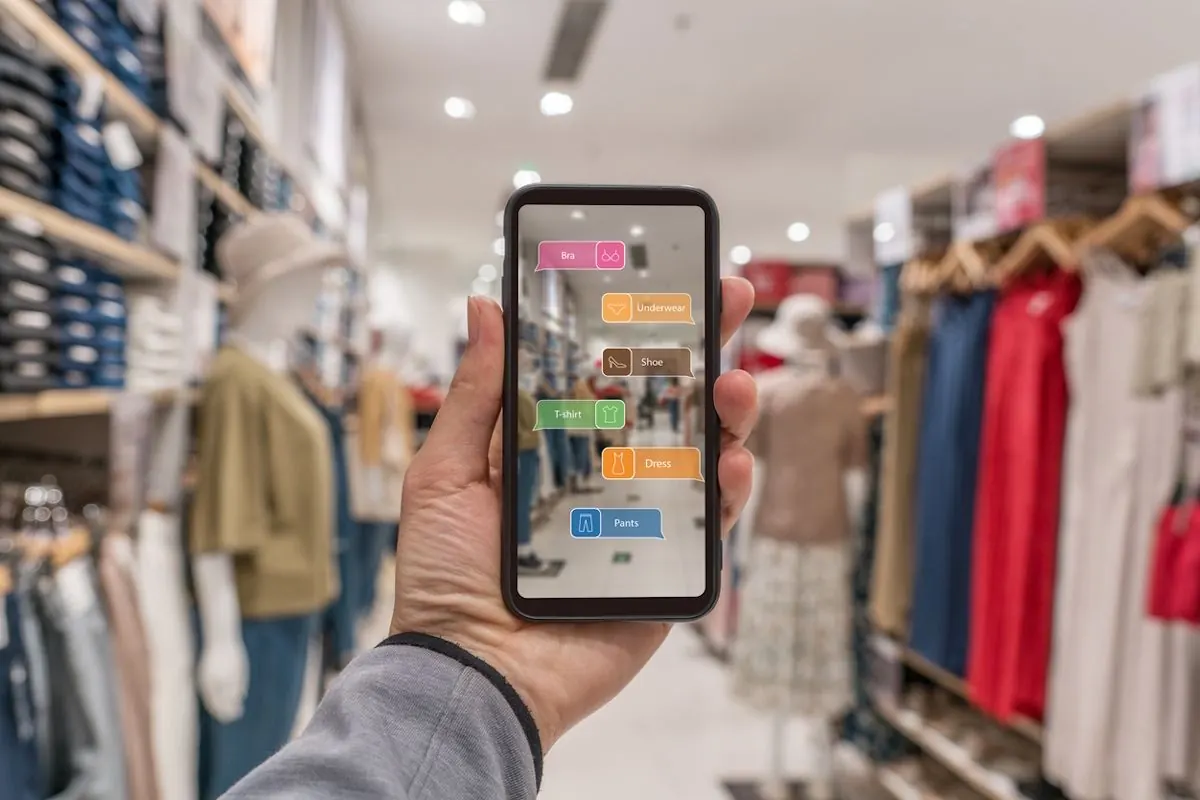
From virtual try-ons to interactive product displays, augmented reality (AR) is redefining how brands engage customers and drive sales. But it's critical to deploy AR in the right way — one that provides value for both retailers and their customers. While many are jumping on the AR bandwagon, only a few retailers are using it effectively.
The question is, if AR is valuable, why isn't everyone realizing it?
The key lies in the appropriate use of the technology. AR is exciting, but it shouldn't be deployed in isolation. Its true potential lies in integration with other technologies, ecosystems, and real-world applications. Leveraged in tandem with RFID, artificial intelligence (AI), and the Internet of Things (IoT), and connected with the wider retail ecosystem, AR can deliver personalized, frictionless customer experiences in real time.
CX Benefits From Integrating AR
Offering immersive, engaging in-store experiences, AR-powered solutions are redefining customer experience (CX). From streamlining operations to tailoring interactions, retailers can use AR in a number of ways to capture its full value.
Real-time inventory visibility for customers. If retailers deploy AR in their stores, they can help customers visualize available stock and even locate products, without the hassle of hunting through aisles. Customers can virtually try on products, instantly know what colors and sizes are available, and see alternative suggestions — creating a frictionless, connected in-store experience.
Omnichannel shopping experiences. As omnichannel shopping becomes more common, AR can make it more seamless and user-friendly, letting shoppers see products in their own environment and building confidence in purchase decisions. Integrating AR with order management systems lets customers reserve, purchase, or request home delivery directly from within the AR interface — removing the hassle of switching between platforms. If an item a customer wants is out of stock, AR can fill the gap by letting them visualize it anyway, driving sales opportunities while increasing satisfaction.
Personalized experiences. Retailers that personalize customer interactions within AR environments can create real value and meaningfully enhance the shopping experience. Combining AR with CRM systems ensures customers get hyper-personalized recommendations based on shopping history, preferences, and even real-time interactions with products — improving sales, since customers are more likely to buy when the suggestions actually feel relevant.
How It Impacts Operations
Integrating AR with the wider retail ecosystem eases the workload on staff. Instead of manually checking stock or searching for alternative sizes, employees can rely on AR systems synced with the broader retail tech stack to provide instant information directly to consumers, freeing staff to spend more time on personal interaction and high-quality in-store experience.
Beyond enhancing in-store experience, AR plays a role in streamlining retail operations. Integrating AR with RFID and wider supply chain technology can enable faster restocking, predictive demand analysis, and automated reordering, so popular AR-featured items stay in stock. Retail associates can use AR-enabled smart glasses to quickly locate products, reducing picking time and errors, and to scan barcodes and QR codes, speeding up inventory management significantly.
The Bottom Line
Augmented reality is a powerful tool, but its potential is limited when it exists in isolation. To reap its full potential, retailers need to integrate it with the wider retail ecosystem and use it alongside other technologies such as AI and RFID.
The real value isn't in standalone AR applications, but in folding the technology into an all-encompassing retail technology stack that creates seamless, connected experiences merging the physical and digital worlds in meaningful ways. Those who approach technology adoption holistically can create frictionless shopping experiences for customers while streamlining their own operations.