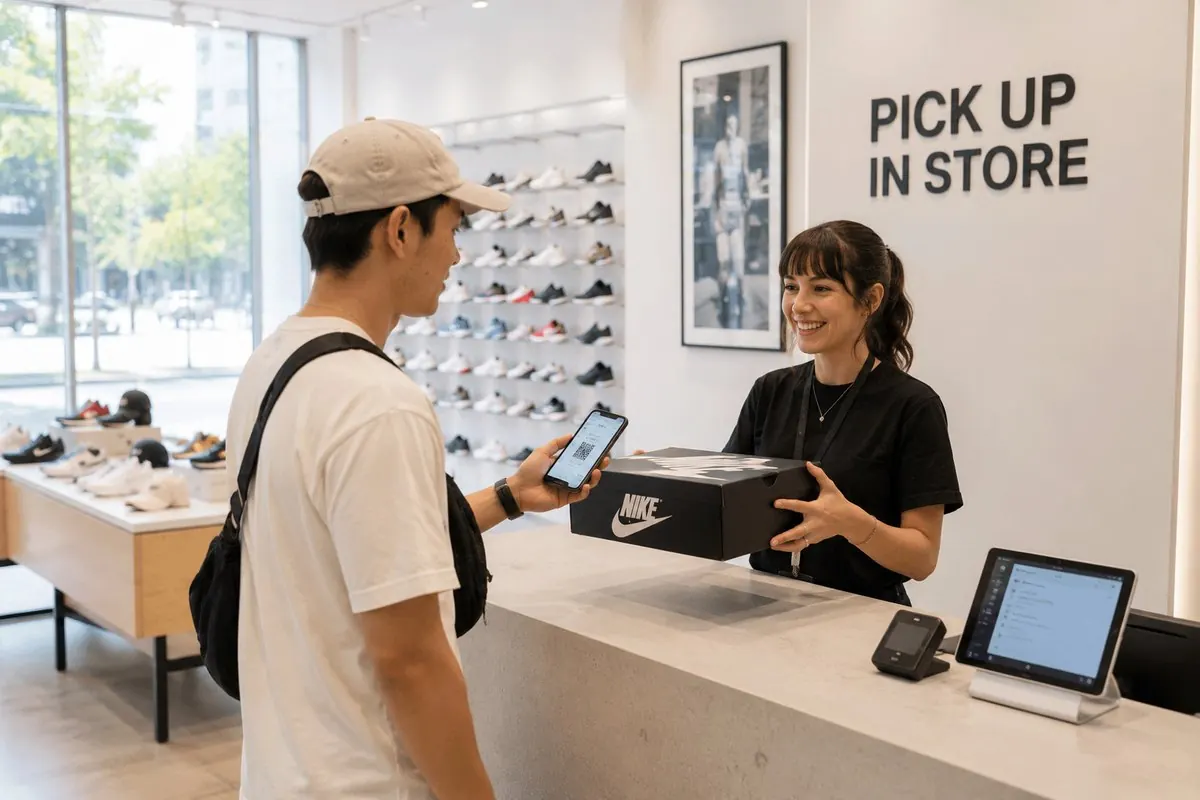
Most enterprise retailers have spent the last decade building omnichannel capabilities. Buy online, pick up in store. Ship from store. Unified loyalty across channels. These were hard-won wins, and for a long time, they were enough.
They are no longer enough.
The retailers pulling ahead in 2026 are not the ones with the most channel integrations. They are the ones whose store teams operate from a single, real-time picture of every customer, every order, and every unit of inventory, regardless of where that customer started their journey. That is unified commerce, and it is a fundamentally different architecture from omnichannel.
The distinction matters because it determines what your store associates can actually do, not what your systems theoretically support. A VP of Retail Operations who understands the difference will make a very different platform decision than one who treats the two terms as synonyms.
This guide breaks down exactly what separates omnichannel from unified commerce, where omnichannel setups consistently break down in store operations, and what a unified commerce architecture makes possible for enterprise retailers in apparel and luxury.
Key takeaway: Omnichannel connects separate systems after the fact and depends on the integrations holding. Unified commerce puts every channel on one platform with one shared data layer, so there is nothing to hold together.
The Core Difference: Connected Experiences vs. a Connected System
Omnichannel and unified commerce are often used interchangeably. They describe two different things.
Omnichannel is a customer experience strategy. The goal is to make the shopper's journey feel seamless across channels: consistent pricing, recognizable loyalty status, the ability to return an online order in store. Achieving this typically requires integrating multiple separate systems, a POS, an ecommerce platform, an OMS, a CRM, and building synchronization layers between them.
Unified commerce is a system architecture. Instead of connecting separate systems after the fact, it consolidates them onto a single platform with one shared data layer. Every channel, every touchpoint, every team draws from the same real-time record.
The practical difference shows up at the store level:
| Scenario | Omnichannel setup | Unified commerce |
|---|---|---|
| Associate looks up a customer's online order history | Requires switching to a separate CRM or lookup tool | Visible in the same POS interface, in real time |
| Customer wants to return an online purchase in store | Often requires a manual workaround or manager override | Processed natively, same order record |
| Inventory check across locations | Batch-synced, may be hours old | Real time, from a single inventory layer |
| Clienteling: associate sees full purchase history | Incomplete if online and in-store data are siloed | Complete, unified customer profile |
| Promotion applied across channels | Requires reconciliation across systems | Single promotions engine, consistent everywhere |
The omnichannel model depends on integrations holding. The unified commerce model does not need integrations to hold, because there is only one system.
Where Omnichannel Breaks Down for Store Operations
If your stores are running on an omnichannel architecture, your teams are already living with the failure modes. They may have workarounds for them. That does not mean the workarounds are acceptable at enterprise scale.
The inventory lag problem
In a typical omnichannel setup, inventory data is synchronized across systems on a schedule: every 15 minutes, every hour, or nightly. For a retailer with 200 locations and high-velocity SKUs, that lag creates a persistent accuracy problem. An associate tells a customer a size is available in a nearby store. By the time the customer drives there, it is gone. The store POS and the ecommerce platform were working from different snapshots.
Unified commerce eliminates the lag because there is no synchronization. Every channel reads from the same inventory record at the same moment.
The customer profile gap
Most omnichannel retailers have a customer profile problem they do not fully acknowledge. The CRM holds email purchase history. The POS holds in-store transactions. The ecommerce platform holds online behavior. Connecting them requires middleware, matching logic, and ongoing maintenance.
When a store associate opens a customer record during a clienteling interaction, they typically see an incomplete picture. They know what the customer bought in store. They may not know about the three online orders placed last month, the return processed at another location, or the loyalty tier the customer just reached.
In luxury and apparel retail, that gap is not a minor inconvenience. It is a missed selling opportunity and a service failure in a segment where customers expect to be known.
The promotions consistency problem
Running a promotion across channels in an omnichannel architecture requires configuring it in multiple systems and trusting that the synchronization holds. When it does not, customers receive inconsistent pricing, and store teams spend time on exception handling rather than selling.
A unified promotions engine applies the same rules everywhere, in real time, with no reconciliation required.
The integration maintenance tax
Every integration in an omnichannel stack is a liability. API versions change. Vendors release updates. Middleware breaks. For enterprise retailers running complex technology stacks across dozens or hundreds of locations, the ongoing cost of maintaining integrations is substantial and frequently underestimated in platform evaluations. The unified commerce model reduces this surface area by design.
What Unified Commerce Makes Possible in the Store
The case for unified commerce is not just about fixing omnichannel's failure modes. It is about what becomes possible for store teams when the architecture is right.
Clienteling that actually works
Clienteling in an omnichannel environment is aspirational. Associates are told to personalize interactions, but they are working from incomplete data pulled from a CRM that may be days behind the customer's actual behavior.
In a unified commerce environment, the associate's mobile POS is the clienteling tool. When a known customer walks in, the associate sees the complete purchase history across every channel, current loyalty status, open orders, and recent returns, all in one interface, updated in real time. The conversation can start with "I see you ordered the navy blazer online last week, did it work out?" rather than a generic greeting.
For luxury and premium apparel retailers, this is not a nice-to-have. It is the difference between a transactional interaction and a relationship-building one.
Mobile-first store operations
A unified commerce platform designed for modern retail runs on mobile hardware. Associates are not tethered to a fixed terminal. They can assist a customer anywhere on the floor, process a transaction, check inventory across every location, place an endless aisle order, and apply a loyalty discount, all from a single device.
This matters for store layout, staffing models, and the overall customer experience. Fixed POS terminals create queues. Mobile associates create conversations.
Real-time inventory decisions
When inventory data is real time and shared across the entire operation, store managers can make better decisions faster:
- Ship-from-store fulfillment becomes reliable because the inventory figure the OMS is routing against is the same one the store sees
- Inter-store transfers can be triggered on actual demand signals, not batch reports
- RFID-enabled inventory integrates directly into the platform, giving item-level accuracy without a separate reconciliation layer
- Endless aisle works as intended: the associate can see and order from the full network, not just what is physically in the store
Consistent execution across markets and banners
For enterprise retailers operating across multiple countries, brands, or banners, a unified commerce platform provides a single operational model that can be configured for local requirements (currency, tax, language, payment methods) without fragmenting the underlying system. Omnichannel stacks in multi-market environments tend to multiply integration complexity with every new market added. Unified commerce scales horizontally without the same overhead.
How to Evaluate Whether You Need Unified Commerce
Not every retailer needs to move to unified commerce today. The urgency depends on where your current omnichannel architecture is creating the most operational friction. Use this diagnostic to assess your situation:
- Do store associates regularly switch between two or more systems to serve a single customer?
- Is your inventory data batch-synced rather than real time across channels?
- Do you have a separate clienteling or CRM tool that is not integrated with your POS?
- Are promotions configured independently in your POS, ecommerce platform, and OMS?
- Are you expanding into new markets or adding store banners in the next 18 months?
- Is your IT team spending significant time maintaining integration middleware?
- Do customers regularly experience pricing or inventory discrepancies across channels?
If you answered yes to three or more of these, your omnichannel architecture is creating operational drag that will compound as you scale. The cost of staying on the current architecture, in integration maintenance, associate productivity, and customer experience failures, is likely higher than the cost of moving to a unified platform.
What to look for in a unified commerce platform
When evaluating platforms, the key questions for retail operations leaders are:
- Are the POS, OMS, and inventory on a single data layer, or are they separate applications connected by APIs?
- Is inventory truly real time across all channels and locations, including in store?
- Does the platform support mobile-first store operations natively, not through a bolt-on associate app?
- How does the platform handle clienteling? Is the customer profile built from all channels, or only in-store transactions?
- What is the integration surface area? How many third-party integrations are required to run a full store operation?
- How does the platform scale across markets? Can it support multiple currencies, tax regimes, and languages from a single instance?
The answers to these questions will quickly separate platforms that describe themselves as unified commerce from those that are genuinely built on a unified architecture.
The Bottom Line for Retail Operations Leaders
Omnichannel was the right goal for a decade when the primary challenge was connecting channels that had never been designed to work together. That era is ending.
The retailers who will lead the next decade are building on architectures where the connection is not an afterthought bolted onto separate systems. It is the foundation. One data layer. One customer record. One inventory truth. Store teams that can operate with the full picture in their hands, on a mobile device, anywhere on the floor.
The shift from omnichannel to unified commerce is not a technology upgrade. It is an operational strategy. And for enterprise retailers in apparel and luxury, where the in-store relationship is still the most powerful selling tool available, getting the architecture right is not optional.
Ready to see what a unified commerce platform built for enterprise retail looks like in practice? Book a demo with Teamwork Commerce and walk through how a single-platform approach changes what your store teams can do from day one.